The global jewelry retail market has shifted dramatically toward sustainable, cost-effective, and high-performance diamond accessories in recent years. Lab grown diamond engagement rings have become the mainstream choice for modern couples, driving massive B2B demand for stable, high-quality bulk supply. For jewelry retailers, brand operators, and bulk resellers, sourcing reliable wholesale lab diamond rings is no longer a simple purchasing task but a core strategy to control product quality, stabilize profit margins, and maintain long-term market competitiveness. As a professional lab-grown diamond jewelry manufacturer with complete production chains from diamond cultivation, cutting and polishing to finished ring inlaying and packaging, we provide a systematic, actionable sourcing guide for B-end buyers to avoid low-quality goods, unstable suppliers and delayed orders.
1. Select Qualified Manufacturers to Lay a Foundation for Bulk Sourcing
The first step of successful bulk procurement is to screen and cooperate with best lab grown diamond ring company. Many small-scale workshops and intermediate traders flood the wholesale market, providing uneven products with non-standard processes and unguaranteed after-sales service. Formal manufacturers with independent factories, complete production equipment and standardized quality control systems are the core guarantee of long-term stable cooperation.
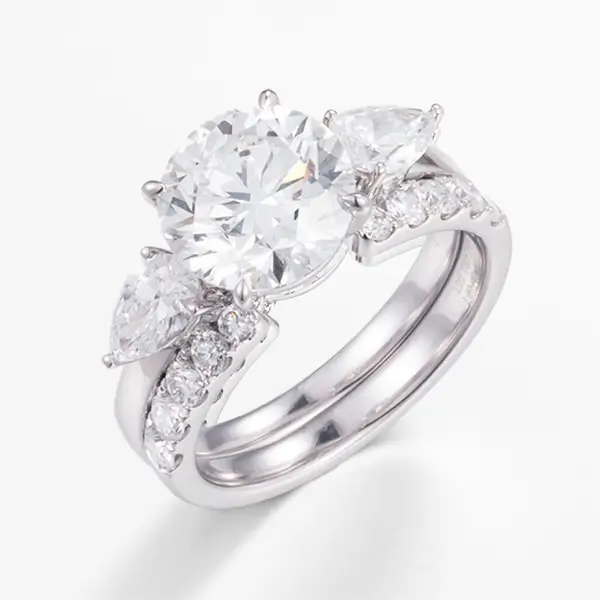
When verifying manufacturer qualifications, B-end buyers need to focus on core strengths including independent diamond growth technology, professional cutting and polishing teams, finished jewelry customization capabilities and complete export qualification certificates. Regular manufacturers can support diversified styles of engagement rings, from classic solitaire designs to sophisticated halo and three-stone styles, covering mainstream consumer market demands. Meanwhile, formal manufacturers have standardized production management systems, which can effectively avoid common problems such as uneven diamond fire, loose inlay and defective metal band polishing in low-cost wholesale products. Choosing a powerful manufacturer can greatly reduce the risk of subsequent bulk order quality problems and market return losses.
Formal wholesale products provided by regular manufacturers are all certified lab diamond rings, equipped with authoritative grading reports issued by IGI, GIA or HRD international gemstone institutions. The certification covers core parameters such as diamond carat, color, clarity, cut grade, fluorescence and growth technology (CVD/HPHT). B-end buyers need to verify the authenticity of certificates through official institution platforms, check whether the laser inscription on the diamond surface is consistent with the certificate number, and eliminate fake certificates and grade-exaggerated products. Different from natural diamonds, lab-grown diamonds have stable quality and standardized grading, and certified products can ensure consistent quality of each ring in bulk orders, helping buyers form unified product pricing and market positioning.
3. Implement Standardized Pre Order Sample Testing
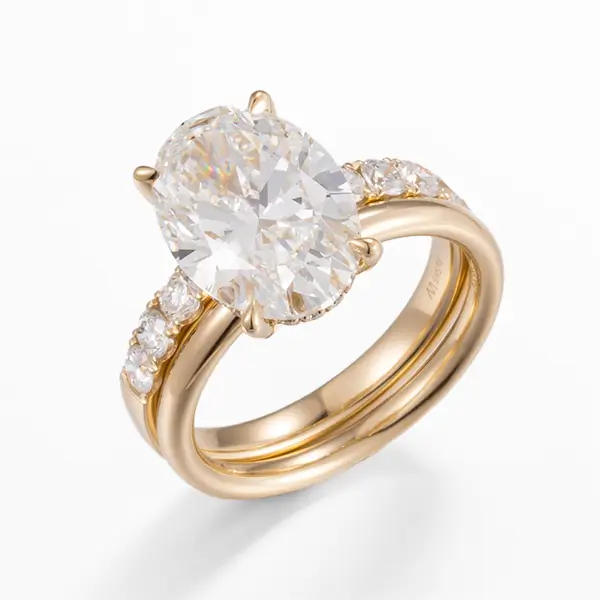
Before launching large-scale bulk procurement, relying solely on manufacturer qualification documents and certification reports is not enough. On-site inspection and physical test of samples are key steps to confirm product consistency, so professional diamond ring sample testing must be completed before formal order placement.
As a manufacturer, we recommend B-end buyers to apply for 2 to 5 physical samples of hot-selling styles according to their market positioning. The testing content includes visual inspection under natural light to check diamond fire and color uniformity, professional instrument detection of diamond clarity and cutting symmetry, manual inspection of ring band inlay firmness, polishing smoothness and size standardization. In addition, buyers can test the wear resistance and oxidation resistance of metal materials (S925 silver, 14K/18K gold) to ensure that the products meet long-term retail sales standards. Sample testing can intuitively verify the manufacturer’s actual craftsmanship level, avoid the problem of “inconsistent sample and bulk goods”, and effectively control the quality risk of engagement ring bulk order. Only samples that pass all-round testing can support subsequent large-scale batch procurement cooperation.
4. Standardize Supplier Evaluation and Factory Audit Process
Long-term B2B wholesale cooperation requires stable and reliable suppliers, so regular lab grown ring vendor audit is essential for buyers to optimize the supply chain. Many buyers only pay attention to unit price when sourcing, ignoring the supplier’s production capacity, quality control system, after-sales mechanism and order management ability, which easily leads to order delays, defective product leakage and poor after-sales service in peak sales seasons.
The manufacturer audit dimension covers four core modules: production capacity, quality control, order management and after-sales service. In terms of production capacity, check the factory’s daily output, equipment scale and raw material reserve capacity to confirm whether it can support continuous bulk engagement ring sourcing and emergency supplementary orders. In terms of quality control, verify the factory’s multi-process inspection mechanism, including raw material diamond screening, semi-finished product inlay inspection and finished product full inspection. In terms of order management, check the supplier’s order tracking system and batch production record system to ensure traceable product quality. In terms of after-sales, confirm the defective product replacement policy, return and exchange standards and customer response speed. Professional vendor audit can help buyers screen out high-quality long-term cooperative manufacturers and eliminate unstable small suppliers.
5. Scientifically Manage Wholesale Order Lead Time
In the jewelry retail industry, holiday sales peaks such as Valentine’s Day, Christmas and wedding seasons have obvious periodicity, so grasping wholesale ring lead time is crucial for B-end buyers to optimize inventory and seize market opportunities. Many buyers face inventory shortages or overstock problems due to unreasonable order cycle planning, resulting in profit loss.
As a professional manufacturer, we clearly divide the wholesale order cycle into sample confirmation period, mass production period, quality inspection period and logistics delivery period. The sample confirmation cycle is usually 3 to 5 working days, which is used for buyers to complete sample testing and style confirmation. The mass production cycle is determined according to the order quantity, and the conventional bulk order production cycle is 7 to 15 working days. After production, all products will undergo strict factory inspection and packaging, and the inspection and packaging cycle is 2 to 3 working days. Finally, cooperate with professional international logistics to complete delivery. Buyers need to put forward orders in advance according to their own sales cycle, reserve sufficient buffer time, and communicate with manufacturers about priority production rights for peak orders, so as to avoid missing sales windows due to delayed delivery. Reasonable lead time management is an important part of efficient lab‑grown diamond wholesale business operation.
6. Grasp Wholesale Pricing and Supply Chain Advantages
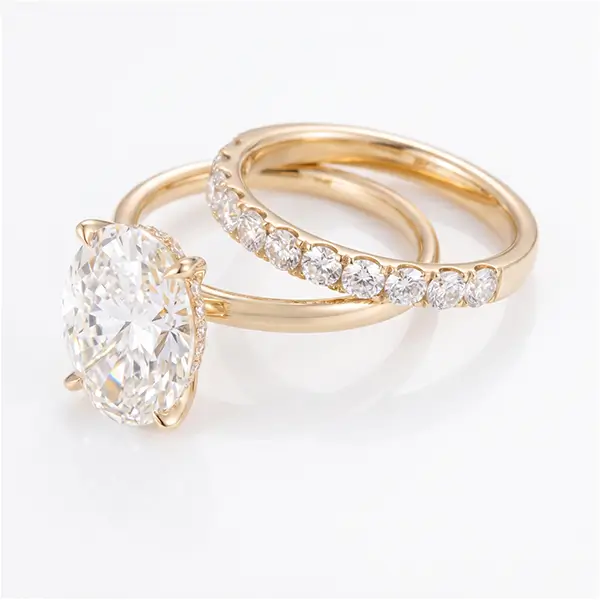
Compared with natural diamond rings, the biggest advantage of lab-grown diamond jewelry is high cost performance and stable supply. Professional manufacturers integrate diamond cultivation, processing and finished product production, realizing one-stop supply of wholesale lab diamond rings, effectively reducing intermediate link costs and providing buyers with more competitive wholesale prices.
In bulk procurement, buyers should focus on the comprehensive cost performance of products rather than simply pursuing low prices. High-quality wholesale lab-grown diamond engagement rings have standardized diamond grading, exquisite inlay technology, stable metal material quality and complete certification services, which can support buyers’ high-end retail positioning and obtain higher profit margins. At the same time, regular manufacturers support personalized customization of bulk orders, including ring band size adjustment, surface engraving, style modification and metal material replacement, which can help buyers differentiate their products and enhance market competitiveness. In addition, long-term cooperative buyers can enjoy flexible price adjustment mechanisms and batch discount policies, further optimizing the overall procurement cost.
7. Long Term Cooperation and Supply Chain Risk Control
For B-end buyers engaged in long-term jewelry wholesale and retail, stable supply chain cooperation is more important than one-time low-price orders. After completing supplier screening, sample testing, certification verification and lead time confirmation, buyers need to establish long-term cooperative relationships with formal manufacturers to form standardized order processes and quality supervision mechanisms.
In the long-term cooperation process, regular vendor audit and random sampling inspection can be maintained to ensure the continuous stability of product quality. Meanwhile, communicate with manufacturers in a timely manner about market trend changes, update hot-selling engagement ring styles in real time, and launch new products in combination with market demand to maintain product freshness and market vitality. In terms of risk control, clarify the order default liability, defective product processing standards and emergency supplementary order mechanisms in the cooperation contract to avoid supply chain risks such as production stagnation and batch quality problems.
Conclusion
Sourcing high-quality wholesale lab grown diamond engagement rings is a systematic work covering supplier screening, quality verification, sample testing, cycle management and long-term cooperation. B-end buyers need to abandon the single price-oriented purchasing concept and take product quality, supplier strength, certification standard and delivery efficiency as the core evaluation dimensions. Cooperating with professional and qualified manufacturers, standardizing each procurement link, and making scientific order and inventory plans can help buyers stabilize product quality, optimize procurement costs, and occupy a dominant position in the increasingly competitive lab-grown diamond jewelry wholesale market.